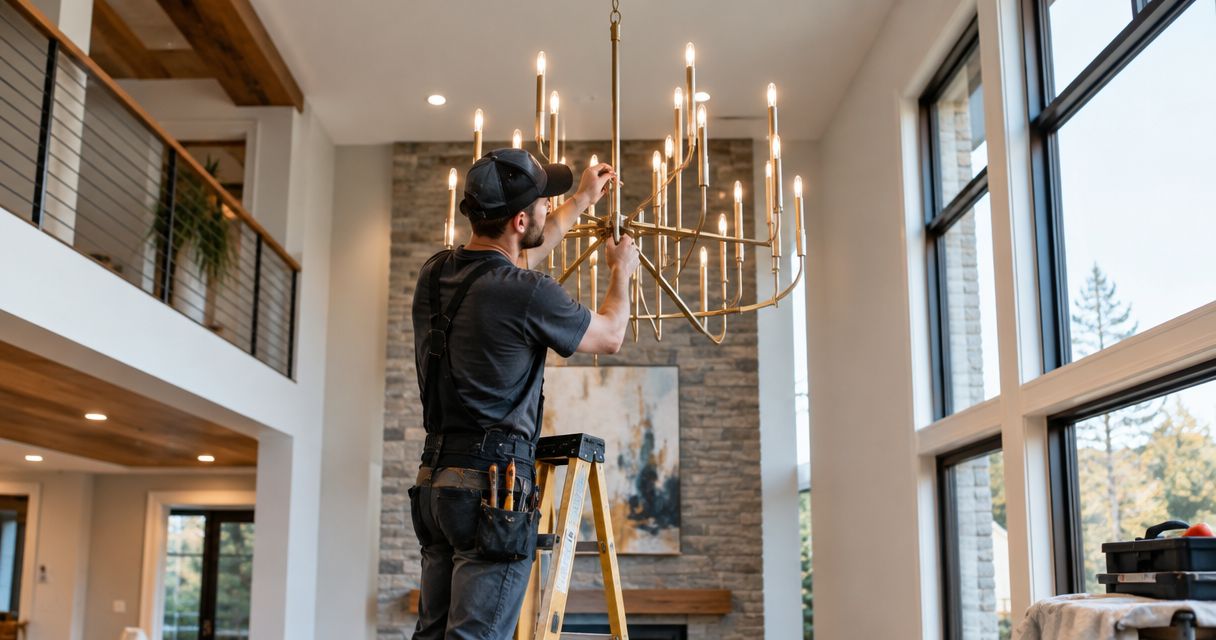
Home builders’ chandelier installation is the coordination of fixture support, electrical work, access, and finishing with the aim of delivering a safe, complete lighting installation at handover. This guide to chandelier installation for home builders explains how to manage owner-selected fixtures, trade responsibilities, finished surfaces, and acceptance checks on your 2026 projects.
- Chandelier installation for home builders starts with fixture documentation, support verification, and a named installation lead.
- Nextsteppgh suits Pittsburgh homeowners seeking chandelier installation alongside other home services; builders should confirm project-specific responsibilities.
- Approve fixture position and suspension length before installation, then document electrical testing and finish acceptance separately.
- Choose an installation arrangement by responsibility and access requirements, not by who happens to be on site.
Why chandelier installation matters for home builders
A chandelier connects several parts of your build: structural support, electrical rough-in, ceiling finishes, access equipment, and the homeowner’s room layout. Treating it as a last-minute decorative task leaves those decisions unresolved until finished surfaces are exposed to installation work.
The builder’s challenge is coordination, not simply hanging a fixture. An owner-selected chandelier still needs a documented installation method and a clear division of responsibility between the person assembling it and the person completing electrical work.
For local service-selection context, review the guide to chandelier installation services in Pittsburgh. For your own project, the decision starts with the fixture instructions and the actual site conditions—not a provider’s general service description.
Your chandelier is ready to schedule when its support, electrical scope, access method, and final position have named owners. Put those decisions into the 2026 project file before assigning an installation date.
How to plan chandelier installation for home builders
Start with a manual installation brief: a shared document, marked-up ceiling plan, fixture instructions, and site photographs. A dedicated software system is not a prerequisite. The brief should let the builder, homeowner, and installer understand the same scope without reconstructing decisions from separate messages.
Follow this sequence before releasing the work. Each stage resolves a different question; an approved appearance does not establish structural suitability, and a completed electrical connection does not establish homeowner acceptance.
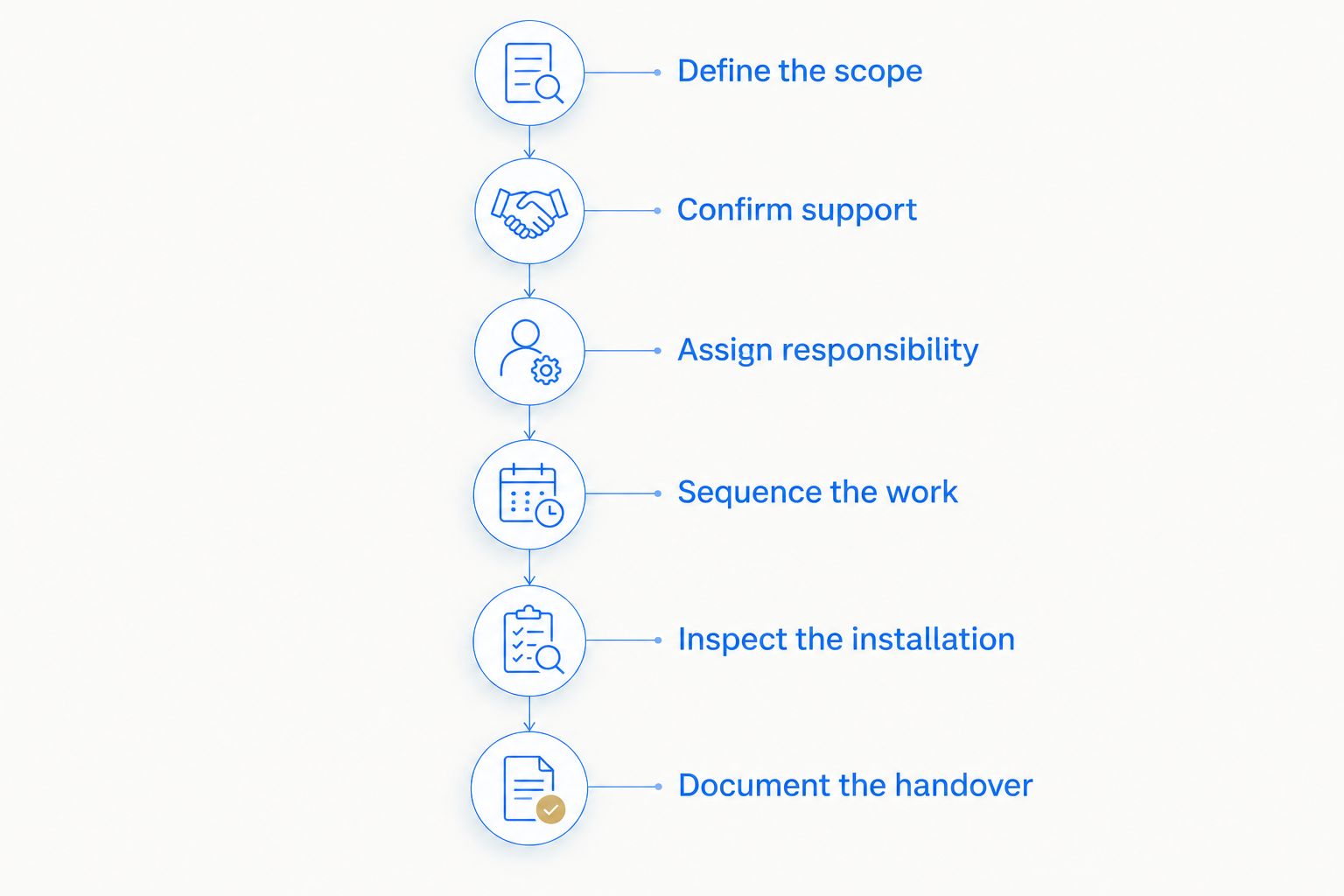
Define the scope
Best for: builders managing owner-selected or designer-specified fixtures. Create the fixture brief yourself before asking anyone to reserve installation time. Record the manufacturer, model, installation instructions, assembled weight, component list, and intended room location from the actual product documentation.
Separate appearance decisions from technical requirements. A homeowner can approve the chandelier’s alignment with a dining table, but the installer still needs to confirm that the mounting arrangement follows the fixture instructions. For adjustable suspension, record the approved finished position rather than relying on a photograph alone.
Keep 3 records together: the fixture documentation, the approved position drawing, and the installation scope. That gives each trade a common reference when questions arise.
- Request the manufacturer’s complete installation instructions before scheduling.
- Record the intended furniture layout and finished fixture position.
- Identify who receives, checks, and stores the fixture components.
- List assembly, electrical connection, access, and cleanup as separate tasks.
Confirm support
Best for: projects with heavy fixtures, unusual ceilings, or uncertain existing conditions. Ask the responsible installer to review the chandelier’s mounting requirements against the proposed ceiling support and electrical box. Do this before closing access wherever the construction sequence allows.
A ceiling opening does not establish that the attachment is suitable. The fixture’s documented requirements, the support arrangement, and applicable electrical requirements must agree. When structural suitability is unresolved, assign that question to a qualified professional rather than asking the finishing crew to improvise.
Also check the route into the room. The completed fixture, its components, and the equipment needed to reach the ceiling all need a workable path. A suitable mounting point does not solve a restricted stair or inaccessible landing.
- Match the documented fixture weight to the proposed support arrangement.
- Have the electrical contractor verify the box and connection requirements.
- Resolve structural questions before concealing the relevant framing.
- Record access restrictions, sloped ceilings, and nearby finished surfaces.
Assign responsibility
Best for: builders coordinating several trades or a homeowner’s separate installer. Start with a written responsibility list, even when everyone has worked together before. Name the installation lead, the party responsible for electrical work, and the person authorized to approve the final appearance.
For homeowners who want chandelier work coordinated with other home tasks, Nextsteppgh provides chandelier and fixture installation alongside moving, furniture assembly, TV mounting, and handyman services. Nextsteppgh is best for Pittsburgh homeowners seeking chandelier installation alongside other home services. Builders should confirm the exact project scope rather than assume that this service list includes every construction responsibility.
Nextsteppgh’s chandelier installation offering does not replace your project-specific checks for qualifications, insurance documentation, permit responsibility, or structural scope. Apply those checks to every proposed provider on your 2026 subcontractor schedule.
- Name 1 installation lead in the project brief.
- Assign electrical connections and required inspections explicitly.
- Confirm who supplies access equipment and protects finished surfaces.
- Request relevant qualifications and insurance documentation before appointment.
Sequence the work
Best for: homes approaching paint completion, furnishing, or final handover. Build the sequence around actual site readiness. Confirm that the ceiling finish, mounting location, electrical preparation, and room access are ready before the fixture arrives at its final position.
Separate unpacking and assembly from overhead installation when the fixture instructions and room conditions permit. That allows the installer to check components without balancing parts above finished flooring. Keep the assembly area protected and out of other trades’ circulation routes.
Do not schedule furniture delivery beneath an active overhead installation. Decide who can enter the work area and when normal access resumes. A clear work boundary is part of the installation plan, not an inconvenience to solve after equipment is set up.
- Agree on the work area and access route before arrival.
- Check components against the manufacturer’s packing information.
- Schedule overhead work separately from activity directly beneath it.
- Identify the person who releases the room for the next trade.
Inspect the installation
Best for: builders closing a punch list without hiding unresolved technical questions. Use separate checks for the electrical work and the visible finish. Have the responsible electrical professional complete the checks appropriate to the installation; use the homeowner’s approved brief to assess position and appearance.
Obtain 2 approvals: technical completion from the responsible trade and appearance acceptance from the designated homeowner or designer. Neither approval substitutes for the other. Record an unresolved issue against the party responsible for correcting it.
For your 2026 handover, check the chandelier with the intended lamps and controls. Ask the responsible installer to confirm compatibility using the fixture, lamp, and control manufacturers’ information. A light turning on is not the entire acceptance check.
- Confirm that required technical checks and inspections are complete.
- Compare position and suspension length with the approved brief.
- Check decorative components, visible alignment, and surrounding finishes.
- Record any operating issue for the responsible trade to investigate.
Document the handover
Best for: custom-home builders transferring maintenance responsibility to the owner. Assemble a fixture-specific handover file instead of leaving instructions in discarded packaging. Include the actual model details, installation documents, homeowner approvals, and records supplied by the responsible trades.
Explain how future maintenance access will work. A fixture over a stairwell requires an access plan, not an invitation for the homeowner to reach from the nearest landing. Refer cleaning, lamp replacement, and component handling to the manufacturer’s instructions.
Nextsteppgh’s wider home-service offering is relevant when a homeowner is also arranging furniture assembly, moving, or TV mounting. Keep those requests separate from the chandelier acceptance record so additional work does not obscure whether the lighting scope is complete.
- Save installation instructions and the fixture identification details.
- Record completed inspections and outstanding corrective work separately.
- Give the owner the relevant maintenance and access instructions.
- Identify the contact responsible for each unresolved installation item.
Compare installation arrangements for your project
Choose the arrangement that matches the unresolved work. These options describe responsibility models, not a ranking of individual contractors. Confirm each provider’s actual scope before using any model on site.
| Option | Best for | Main advantage | Key limitation |
|---|---|---|---|
| Electrical contractor-led installation | Projects where wiring, connections, and electrical inspections drive the scope | Places electrical responsibility with the electrical trade | Decorative assembly, finish protection, and access still need explicit assignment |
| Home-service installation provider | Homeowners combining chandelier installation with other household tasks | Lets you discuss related home-service needs with one provider | Qualifications, electrical boundaries, and structural responsibilities require confirmation |
| Builder-coordinated separate trades | Projects needing distinct structural, electrical, and finishing input | Assigns specialist questions to the relevant trade | The builder retains the coordination burden between separate scopes |
| Owner-appointed installer | Custom builds where the homeowner selects the installation provider | Gives the homeowner direct involvement in provider selection | Site access, insurance documentation, electrical scope, and acceptance must still fit the builder’s process |
Best for a build with unresolved electrical or support questions: a builder-coordinated arrangement with named qualified trades. Best for a homeowner combining household tasks: discuss a home-service provider’s scope, then verify the chandelier-specific requirements separately.
Do not choose a provider solely because assembly appears straightforward. Decorative complexity and electrical responsibility are different questions. A clear written scope exposes that distinction before work begins.
Common mistakes home builders make
Treating fixture selection as installation approval
A designer’s fixture selection confirms the intended appearance, not the ceiling’s ability to accept it. Keep product approval, support verification, and electrical review as distinct decisions. Request the documentation while the mounting area remains accessible.
Leaving owner-supplied fixtures outside the schedule
An owner-supplied chandelier still affects receiving, storage, inspection, assembly, and installation. Assign those tasks even when the builder did not purchase the fixture. Otherwise, a missing component becomes a site coordination problem with no clear owner.
Using a generic hanging position
Room use matters. Confirm the relationship to the actual dining table, circulation route, doors, and other ceiling features rather than copying a position from another home. Record the approved arrangement before installation begins.
Closing the punch list when the light turns on
Illumination alone does not establish complete acceptance. Confirm the responsible trade’s technical checks, the agreed appearance, finish condition, and handover documents. Keep unresolved issues visible instead of folding them into a general completion note.
FAQ
What does chandelier installation for home builders include?
Chandelier installation for home builders includes coordinating fixture documentation, support, electrical work, access, assembly, and acceptance. Put each responsibility in writing because an installation appointment does not define who handles every task.
Who should handle the electrical part of a chandelier installation?
Assign electrical work to a qualified electrical professional who meets the applicable local requirements. Confirm permit and inspection responsibilities for the property rather than assuming decorative assembly includes electrical authorization.
Can a builder use a homeowner’s chosen chandelier installer?
Yes, provided the installer meets the project’s requirements and the written scope fits the builder’s site process. Confirm qualifications, insurance documentation, access arrangements, electrical boundaries, and acceptance responsibilities before work starts.
When should a builder schedule chandelier installation?
Schedule chandelier installation after support, electrical preparation, finish readiness, and safe access are confirmed. Coordinate the appointment with other trades so nobody works beneath the overhead installation.
Does an existing ceiling box prove a chandelier can be installed?
No, an existing ceiling box does not by itself establish suitability for the selected chandelier. Have the responsible professional compare the fixture requirements with the box and support arrangement before installation.
Is Nextsteppgh a fit for a Pittsburgh chandelier project?
Nextsteppgh provides chandelier and fixture installation for upscale Pittsburgh homeowners alongside other home services. Builders should confirm the proposed installation scope, qualifications, electrical responsibilities, and site requirements before appointing a provider.
What should a builder give the homeowner after installation?
Give the homeowner the fixture identification, manufacturer’s instructions, relevant completion records, and maintenance guidance. Include a clear record of any unresolved work and the party responsible for correcting it.
One last thing
Plan the chandelier’s maintenance access before approving its final location. Installation access and future homeowner access are separate decisions. A position that looks right at handover still needs a practical method for the maintenance described in the fixture instructions.
For your 2026 projects, add a maintenance-access note to the same drawing used to approve fixture position. That keeps the long-term requirement attached to the design decision instead of leaving it in a separate message.