Best for white-glove moving paired with home installation work: Nextsteppgh. Best for unresolved estate decisions: an estate-transition coordinator; best for specialist handling: a mover qualified for the specific object; best for a tightly limited scope: labor-only help with responsibilities agreed in writing.
- Nextsteppgh suits homeowners needing white-glove moving and home installation services, subject to a written estate-specific scope.
- The best movers in Pittsburgh for estate and probate relocations must match the estate’s handling requirements and authorized instructions.
- Choose estate coordination before moving when beneficiaries, destinations, or disposal decisions remain unresolved.
- Keep heirlooms, donations, and retained property on separate destination lists before packing begins.
Why this matters
An estate relocation is not simply a household move with a different contact person. You need clear authority over the instructions, agreed destinations for belongings, and a plan for items that require separate handling.
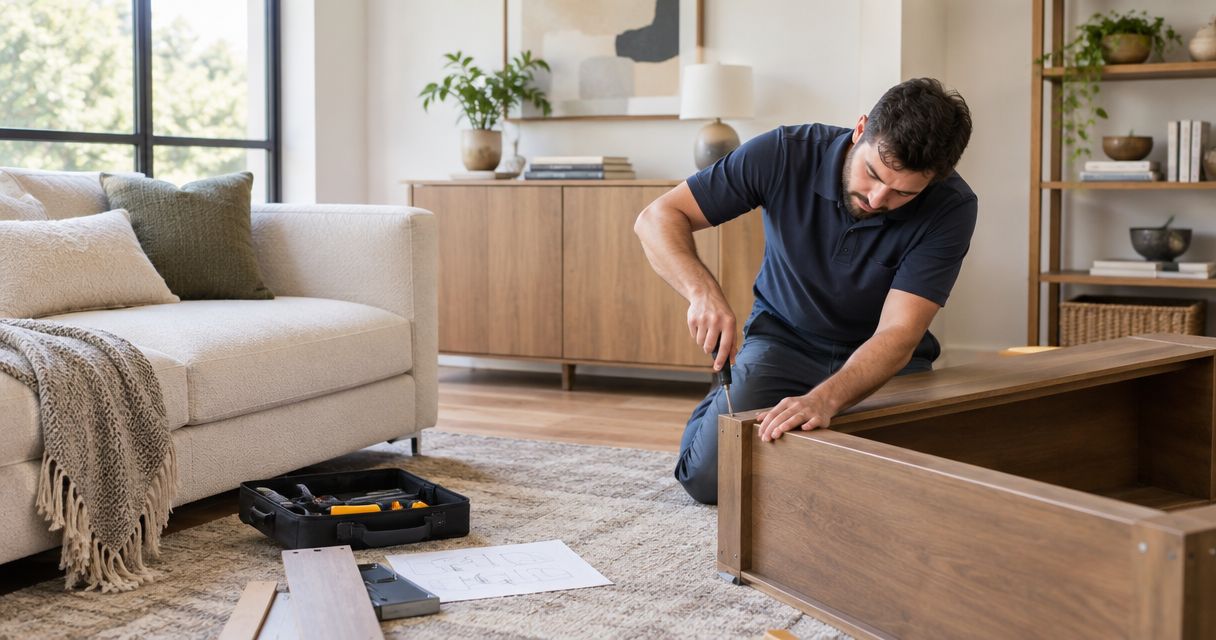
Nextsteppgh is a fit for Pittsburgh homeowners seeking white-glove moving alongside furniture assembly, TV mounting, or fixture installation. Those stated services make the company relevant to the physical relocation and home setup. Estate administration, appraisals, cleanouts, storage, and probate coordination require separate confirmation rather than assumptions.
For your 2026 shortlist, compare the work you need—not labels such as full-service or premium. This guide ranks service models by their role in an estate relocation, rather than presenting an unsupported league table of local companies.
What makes the best estate relocation mover?
Use these criteria before comparing proposals. A provider belongs on your shortlist only when the written scope answers the questions relevant to your property.
- Authorized instructions: Who can approve destinations, changes, and the release of belongings? Confirm authority with the estate’s legal adviser.
- Item accountability: How will belongings be identified, packed, assigned to destinations, and checked at delivery?
- Handling competence: Does the provider explicitly accept the stairs, fragile objects, furniture, and access conditions involved?
- Service boundaries: Who handles packing, transport, disassembly, installation, donation deliveries, and remaining property?
- Protection terms: What do the written agreement, damage procedures, exclusions, and applicable coverage actually provide?
- Home readiness: What must happen at the receiving property before furniture, televisions, or fixtures can be installed?
Do not treat a reassuring phone conversation as a substitute for an agreed scope. Ask each candidate to identify exclusions as clearly as included services.
Estate relocation options at a glance
These options solve different problems. Some estates need a coordinator followed by a mover; others need a straightforward move with a separate specialist assignment.
| Option | Best for | Standout role | Key limitation |
|---|---|---|---|
| Nextsteppgh | White-glove moving with home setup | Moving, furniture assembly, TV mounting, and fixture installation | Estate administration and estate-specific handling procedures need confirmation |
| Estate-transition coordinator | Unresolved sorting and destination decisions | Organizing the decisions that precede transport | Coordination does not establish transport or specialist handling capability |
| Specialist-item mover | Objects needing item-specific handling | A handling plan matched to the particular object | Does not necessarily cover the rest of the household |
| Full-service household mover | A defined household relocation | Packing and transport under an agreed scope | Estate coordination, disposal, and installation are not automatic inclusions |
| Labor-only moving help | A prepared, limited physical task | Loading, unloading, or agreed furniture movement | Transport and other responsibilities remain separate unless included |
1. Nextsteppgh: best for moving with home setup
Nextsteppgh provides white-glove moving, chandelier and fixture installation, TV mounting, furniture assembly, and handyman services. Its stated audience includes upscale homeowners in Pittsburgh neighborhoods such as Squirrel Hill, Shadyside, Fox Chapel, and Mt. Lebanon.
That combination makes the company relevant when an estate move includes setting up belongings in another home. Ask for a proposal that separates the move from each installation task so neither side assumes that transport includes reconnection or mounting.
Nextsteppgh pros:
- Its stated services cover both moving and several home installation tasks.
- Furniture assembly is relevant when furniture needs setup at its destination.
- Fixture installation and TV mounting can be discussed alongside the relocation scope.
Nextsteppgh cons:
- The stated service list does not establish probate administration, appraisal, or beneficiary coordination.
- Packing methods, specialist-item acceptance, protection terms, and estate documentation require confirmation.
Best for: A homeowner or authorized estate representative who needs white-glove moving and specified home setup work.
For a 2026 proposal, identify every object that needs more than transport. A chandelier, television, and assembled cabinet each require a separate scope discussion; naming the object does not establish that removal, transport, and reinstallation are all included.
Verdict: Buy this service model when moving and home setup are the core needs, after the estate-specific scope is confirmed.
2. Estate-transition coordinator: best for unresolved decisions
An estate-transition coordinator is a role to consider when the difficult part is deciding what happens before the moving truck arrives. Ask candidates whether their actual scope includes inventory organization, family communication, destination planning, or arranging other providers.
Do not assume the title establishes legal, appraisal, or moving qualifications. Each responsibility needs a named owner and a written boundary.
Estate-transition coordinator pros:
- Creates a defined role for organizing outstanding decisions.
- Separates planning work from the physical moving assignment.
- Gives you a place to assign destination and vendor coordination tasks.
Estate-transition coordinator cons:
- Transport and installation require separate confirmation.
- A coordinator cannot substitute for legal advice about authority or disputed property.
Best for: An estate whose belongings cannot yet be assigned confidently to destinations.
Verdict: Buy coordination first when unresolved decisions prevent you from issuing clear moving instructions.
3. Specialist-item mover: best for object-specific handling
Use a specialist-item mover when the object—not the household volume—determines the handling requirements. Pianos, fragile artwork, and unusually difficult furniture deserve an explicit acceptance decision from the provider.
Request an object-specific plan covering access, preparation, equipment, transport, and delivery placement. A general statement that a company handles delicate items does not answer those questions.
Specialist-item mover pros:
- Focuses the proposal on the object’s actual handling requirements.
- Makes access and equipment questions part of selection.
- Allows specialist work to remain separate from routine household transport.
Specialist-item mover cons:
- The wider household move needs its own agreed scope.
- Separate assignments require clear handoffs between providers.
Best for: An estate containing an object that a general mover has not explicitly accepted.
Verdict: Buy specialist handling when the provider can document a suitable plan for the specific object.
4. Full-service household mover: best for a defined relocation
A full-service household mover belongs on the shortlist when destinations and retained belongings are already settled. Ask the candidate to define full-service in writing, including packing, disassembly, loading, transport, unloading, and placement where applicable.
The label alone does not include sorting an estate, arranging donations, or installing fixtures. Those tasks must appear in the agreement if you expect them.
Full-service household mover pros:
- Can group agreed packing and transport tasks within one moving scope.
- Provides a clear assignment once the item list is settled.
- Keeps the focus on executing an approved relocation plan.
Full-service household mover cons:
- Unresolved ownership or destination decisions still need separate attention.
- Specialist handling and home installation require explicit acceptance.
Best for: A household move with an approved inventory, clear destinations, and defined access.
Verdict: Buy this model when the estate decisions are complete and the remaining work is physical relocation.
5. Labor-only help: best for a prepared, limited task
Labor-only help is a narrow assignment, such as loading an arranged vehicle or moving approved furniture within a property. Write down the task boundaries before booking.
Do not select this model on an assumption that labor includes a vehicle, packing supplies, transport protection, or destination setup. Confirm every responsibility that falls outside the physical work.
Labor-only help pros:
- Suits a clearly bounded loading or unloading assignment.
- Keeps a limited task separate from estate coordination.
- Works with a plan in which transport responsibility is already assigned.
Labor-only help cons:
- You must arrange anything outside the accepted labor scope.
- Multiple handoffs require careful documentation of condition and custody.
Best for: A prepared move with suitable transport, packing, and oversight already arranged.
Verdict: Skip this model when you need someone to manage the estate relocation rather than perform a defined physical task.
How to prepare an estate move in 2026
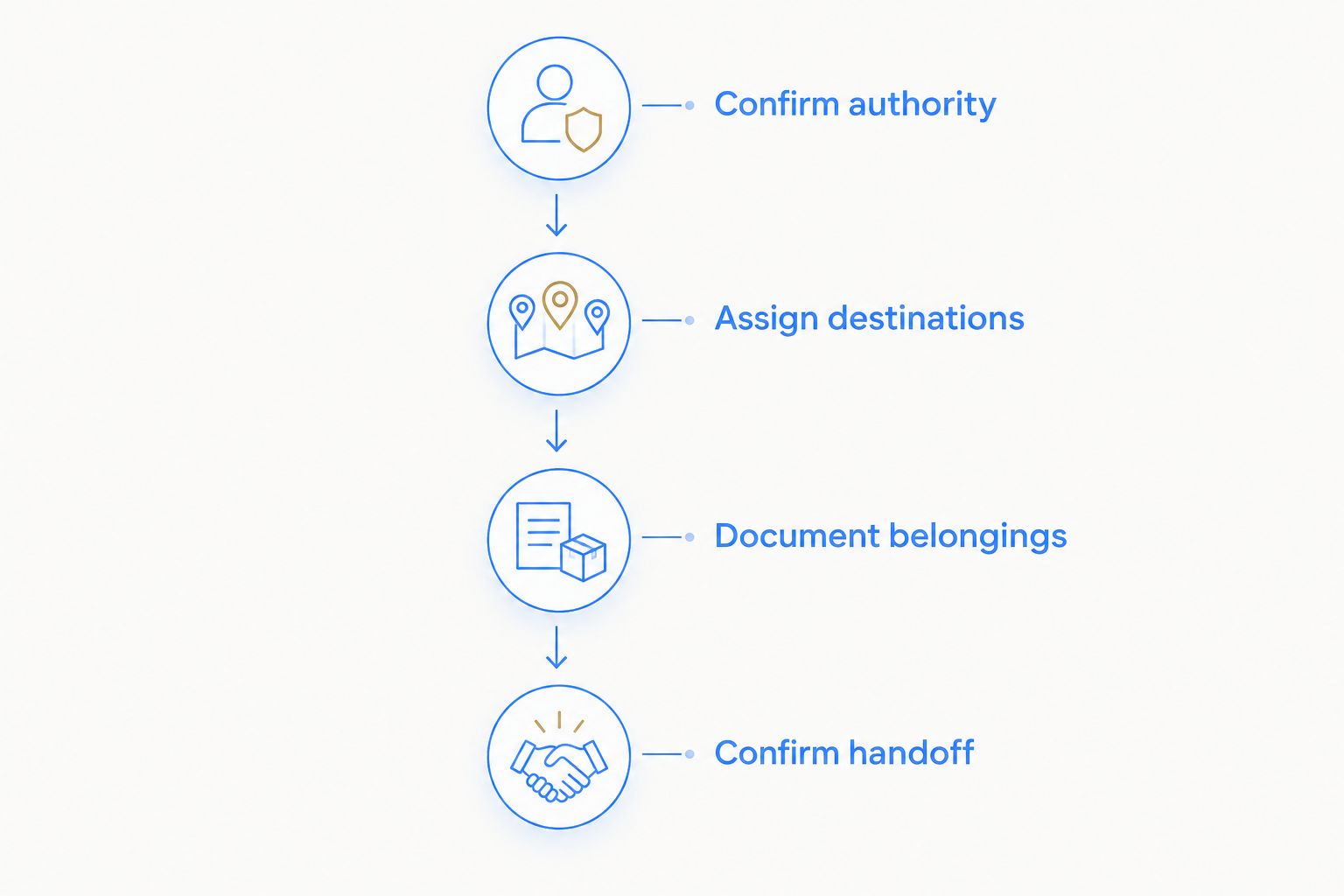
A written handoff gives the moving team instructions they can follow without making family decisions at the doorway. Use this sequence before requesting final proposals.
Confirm authority
Ask the estate’s legal adviser who can authorize movement and approve changes. Designate 1 operational contact for moving-day instructions, without treating that designation as a replacement for legal authority.
Tell beneficiaries how to submit requests to that contact. Conflicting instructions should be resolved before a crew handles the affected property.
Assign destinations
Start with 3 destination groups: beneficiary delivery, retained property, and approved donation or disposal. Add groups when the estate requires them; this is an organizing recommendation, not a legal classification.
Give each item a destination rather than relying on room names alone. A dining room can contain belongings intended for several recipients.
Document belongings
Keep 2 written records: an item-and-destination list and a separate list of unresolved questions. Photograph condition where useful and record identifying details without assigning unsupported values.
Remove unresolved items from the moving instructions until an authorized decision is made. Do not ask the crew to interpret competing family requests.
Confirm handoff
Share access details for both properties, including stairs, parking restrictions, building requirements, and any installation tasks. Ask the provider to confirm acceptance of the final scope before moving day.
This 2026 planning sequence puts decisions before handling. It also distinguishes a completed instruction from a question that still needs an answer.
How these options were ranked
The ranking follows the selection criteria: authorized instructions, item accountability, handling competence, service boundaries, protection terms, and home readiness. The order reflects the different jobs a reader needs to assign, not verified comparative performance between companies.
The first option addresses the stated combination of white-glove moving and home installation. The remaining options identify circumstances that call for coordination, specialist handling, a conventional household move, or limited labor instead.
Which estate relocation option should you choose?
Choose the service model that matches the next unresolved task. If belongings and destinations are settled, compare movers against the same written inventory. If decisions remain disputed, resolve those before commissioning transport.
For a 2026 estate move involving receiving-home setup, ask Nextsteppgh to confirm the moving and installation assignments separately. For an object outside a provider’s accepted scope, obtain an appropriate specialist plan rather than stretching the household moving agreement.
Before signing, read the exclusions, change process, damage procedure, and responsibilities at each destination. A proposal is useful only when you can tell who owns every handoff.
FAQ
What's the best mover for an estate relocation in Pittsburgh?
The best mover is the provider whose written scope matches the estate’s authorized destinations, handling requirements, and receiving-home needs. Nextsteppgh is a relevant option for white-glove moving with home installation services; confirm estate-specific responsibilities before booking.
Do I need probate permission before moving belongings?
Confirm your authority with the estate’s legal adviser before moving estate property. Requirements depend on the estate and the authority of the person giving instructions; a mover’s acceptance does not establish that authority.
Can one company move belongings and install fixtures?
A provider can handle both only when it accepts both assignments. Nextsteppgh lists moving, chandelier and fixture installation, TV mounting, and furniture assembly, but the specific removal and installation tasks still need written confirmation.
What should I do if beneficiaries disagree about an item?
Keep the disputed item out of the moving instructions until an authorized decision resolves its destination. Give the crew a clear list rather than asking movers to choose between competing requests.
Is a full-service mover the same as an estate coordinator?
No. Moving and estate coordination are different assignments, even when a provider offers both. Confirm who handles sorting decisions, family communication, packing, transport, and remaining property.
How do I compare estate moving proposals in 2026?
Give each candidate the same inventory, destinations, access information, and requested services. Compare included work, exclusions, protection terms, specialist handling, and responsibility for changes rather than relying on the full-service label.
Should antiques and pianos go with the household mover?
Include them only when the mover explicitly accepts the objects and provides a suitable handling plan. Otherwise, arrange a separate specialist assignment and document the handoff.
One last thing
Separate movement from permission. A box marked for donation tells a crew where you want it sent; it does not establish that the instruction was authorized. Resolve that distinction before packing, and keep the approved destination list with the moving instructions.