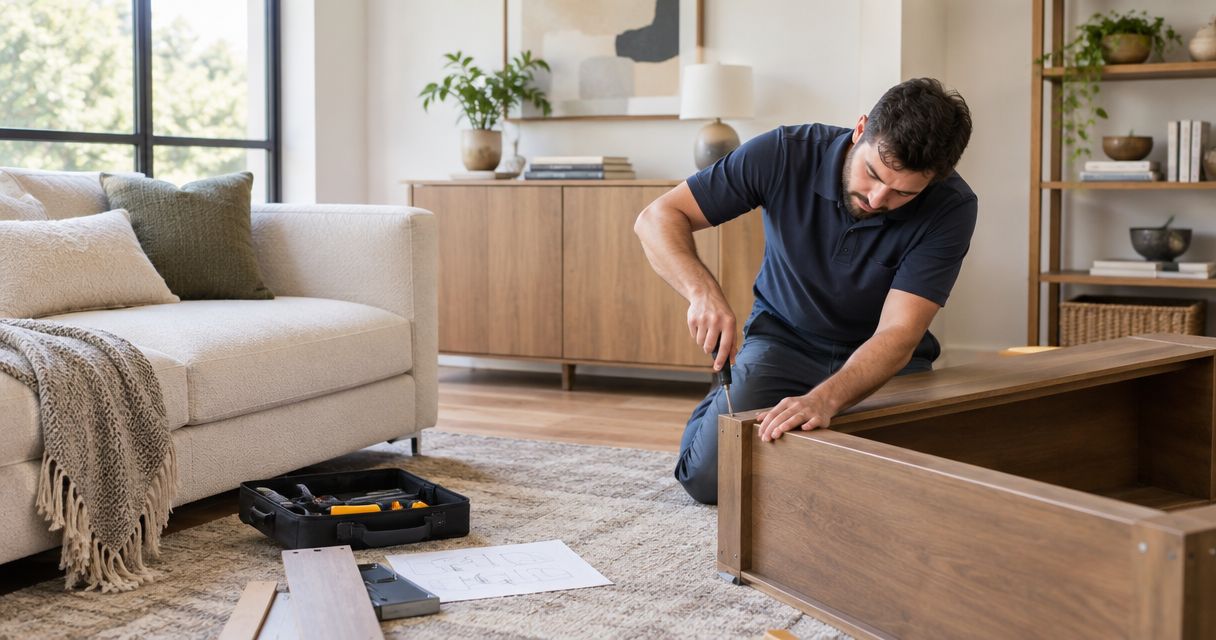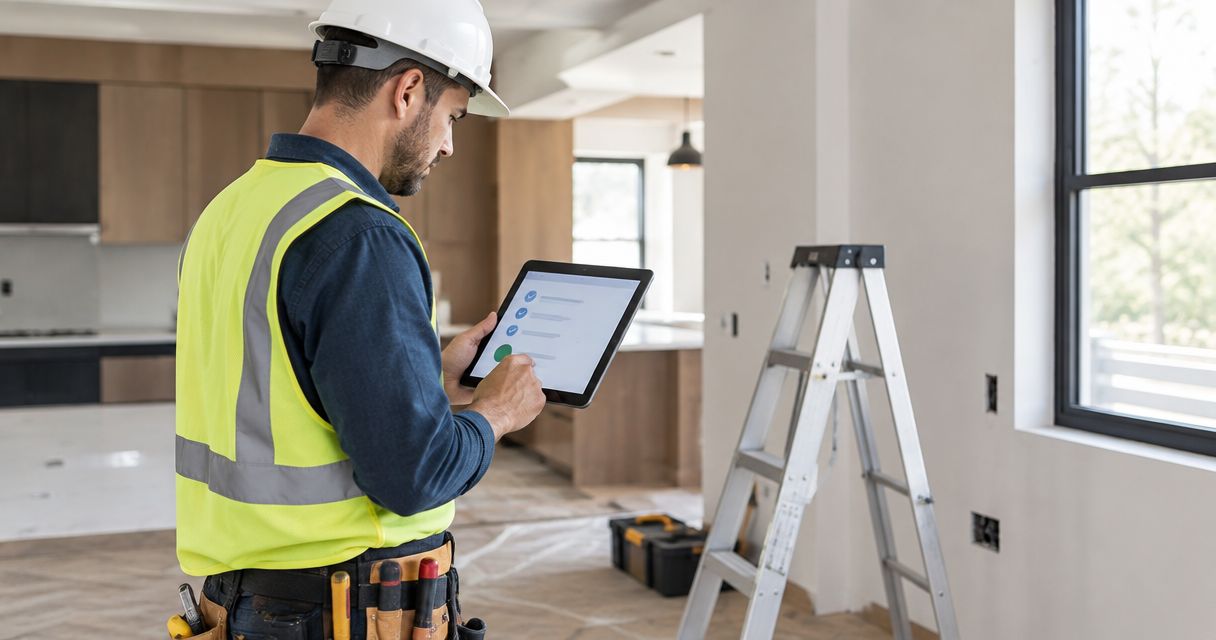
Punch-list handyman services for contractors are finish-stage repair and adjustment services that help you close documented defects and hand over a completed project. For contractors working in upscale Pittsburgh homes, the assignment also requires protecting finished surfaces, coordinating trade responsibilities, and securing clear homeowner acceptance.
- Punch-list handyman services for contractors work best with written scope, assigned responsibilities, and documented acceptance.
- Nextsteppgh is best for Pittsburgh homeowners seeking white-glove handyman care at project handover.
- Use a handyman for agreed finish work; return technical defects to the responsible qualified trade.
- Approve materials and completion criteria before scheduling repairs in occupied or newly finished homes.
Why punch-list handyman services matter for contractors
A punch list sits between construction completion and homeowner acceptance. A cabinet adjustment, damaged trim edge, or unfinished assembly task can keep that handover open even when the main construction work is complete.
The contractor's problem is coordination, not simply finding someone who can repair things. You need to distinguish unfinished scope from new requests, avoid disturbing completed work, and give the homeowner a clear record of what was resolved.
For your 2026 closeout plan, separate construction corrections from homeowner setup tasks. Nextsteppgh provides white-glove moving, fixture installation, TV mounting, furniture assembly, and handyman services for upscale Pittsburgh homeowners. Confirm the specific scope and contractor coordination requirements before assigning project work.
A useful punch list describes the finished condition, not just the problem. “Adjust the cabinet door so it closes without rubbing” gives the assigned worker a clearer endpoint than “fix cabinet.”
How to organize contractor punch-list work
Define the scope before requesting help
Start with a shared document or spreadsheet. Walk the property with the project lead, record each issue by room, and distinguish contract corrections from additional homeowner requests. You do not need specialized software to make the assignment clear.
Write each item so someone who missed the walkthrough can understand it. Include the exact location, observed condition, expected result, and any finish or material restrictions. “Touch up paint” is incomplete without identifying the surface and approved coating.
Keep your 2026 closeout scope separate from the homeowner's wish list. Adding shelving or mounting a television belongs in an approved additional-work scope unless it was already part of the contract.
- Assign 1 owner to each item, even when several people contribute.
- Identify the room, wall, fixture, or cabinet involved.
- State the condition required for acceptance.
- Separate original-scope corrections from added work.
- Record exclusions before requesting a proposal.
Assign the right work to the right provider
Sort the list yourself before scheduling anyone. A short finish-work assignment is different from investigating a recurring leak, correcting an electrical fault, or resolving a structural concern. Job size alone does not determine who should perform it.
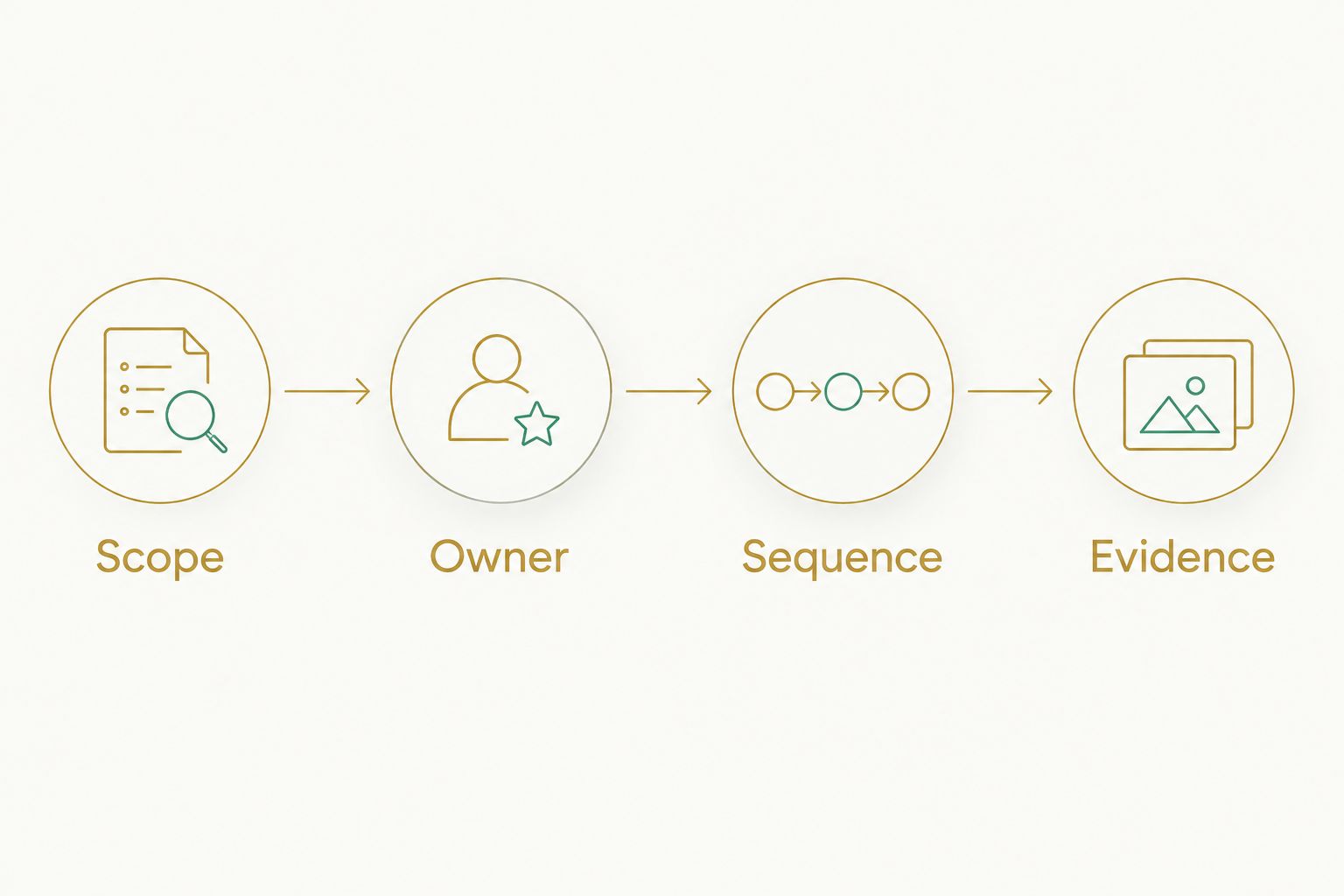
Use four fields to make the handoff readable: Scope, Owner, Sequence, and Evidence. Scope states the task; Owner identifies the responsible person; Sequence shows dependencies; Evidence defines the completion record.
A coordinated handyman visit becomes useful after you have grouped suitable tasks. Nextsteppgh's handyman and home-setup services are relevant to that discussion, but the assignment still needs explicit agreement on tasks, access, and trade boundaries.
- Return installation defects to the responsible original trade.
- Route safety concerns to an appropriately qualified professional.
- Group agreed finish repairs into a defined handyman scope.
- Keep homeowner setup separate from construction corrections.
- Confirm who approves changes discovered during the visit.
Document finishes and protect the home
Build a finish record using existing specifications, leftover materials, and homeowner-approved samples. Photograph the surrounding surface as well as the defect. A close-up shows the problem; a wider view establishes its location and condition.
In upscale homes, a successful repair must respect adjacent materials. Access routes, furniture placement, dust control, and cleanup belong in the work plan rather than being left to assumptions at the door.
Older homes need particular attention to original details and previous alterations. The guide to handyman services in Shadyside for historic homes addresses a related setting; retain project-specific instructions for every historic finish involved in your assignment.
- Capture 2 photo views per item: context and detail.
- Identify approved paint, hardware, and replacement materials.
- Mark delicate surfaces and areas excluded from access.
- Agree on floor protection and dust containment.
- Record existing damage before repair work starts.
Sequence repairs around dependencies and access
Use a calendar and your task list to build the schedule manually. Identify work that creates dust, requires drying, blocks access, or depends on another trade. Then arrange the remaining tasks around those constraints.
Do not treat the punch list as a collection of interchangeable jobs. A finish repair completed before the underlying defect is corrected creates repeat work. Likewise, moving furniture into a room before wall work is accepted complicates access.
For a 2026 Pittsburgh handover, establish who controls entry and who can authorize a change while work is underway. An occupied home needs a different access plan from an empty property awaiting its final walkthrough.
- Resolve underlying defects before cosmetic corrections.
- Schedule dusty work before final cleaning.
- Keep access clear until wall and ceiling work is accepted.
- Confirm entry arrangements and homeowner restrictions.
- Name a decision-maker for unexpected conditions.
Set acceptance criteria before approving work
Create a simple acceptance column in your spreadsheet. Describe how the completed item will be checked: operation, alignment, appearance against an approved sample, or another observable result. Avoid a vague instruction such as “make good.”
Use 3 status labels: Open, Ready for review, and Accepted. A worker marking an item complete should move it to review, not automatically convert it into homeowner approval.
Build 2 review gates into the process: contractor inspection and homeowner acceptance. This keeps your quality check separate from the client's decision. The same person can coordinate both gates, but the record should show which review occurred.
- Define the observable result for each repair.
- Identify who can accept the completed item.
- Require completion photos where they show the result.
- Test moving parts rather than relying on photographs.
- Record the reason whenever an item returns to Open.
Close the record and hand over the home
Finish with a joint review of the list, not a verbal assurance that everything is done. Confirm accepted items, remaining exceptions, and any homeowner requests that became separate work. Keep unresolved items visible until responsibility is agreed.
Your 2026 closeout record should also distinguish maintenance information from repair evidence. A photograph can document appearance, while an operating instruction explains how to use a newly installed item. Neither replaces the other.
Nextsteppgh's moving, assembly, mounting, fixture installation, and handyman services cover several homeowner handover needs. Discuss those tasks as a separate, clearly approved scope rather than assuming that every setup request belongs to the construction punch list.
- Review the accepted list with the authorized decision-maker.
- Record unresolved exceptions and responsible parties.
- Separate additional work from corrected contract scope.
- Provide relevant care and operating information.
- Save the final record with the project documents.
Compare your punch-list completion options
Choose by responsibility and task type, not by who can arrive first. An original trade, an internal crew, and a handyman serve different purposes. None replaces a written scope or the contractor's acceptance process.
| Option | Best for | Main advantage | Key limitation |
|---|---|---|---|
| Original subcontractor | Defects in that trade's installed work | Keeps correction responsibility with the original installer | Requires coordination across separate trades |
| Contractor's own crew | Work within the crew's skills and project scope | Preserves direct control of sequencing and inspection | Pulls crew attention away from other assignments |
| Independent handyman | Clearly defined finish repairs and adjustments | Groups suitable small tasks into one assignment | Qualifications and permitted scope must match each task |
| Nextsteppgh | Pittsburgh homeowners needing white-glove handyman care and related setup | Provides handyman services alongside moving, assembly, mounting, and fixture installation | Contractor coordination and individual task suitability require confirmation |
| Qualified specialist | Technical faults or work requiring specific qualifications | Matches specialized work to the appropriate expertise | Does not replace coordination of the remaining finish list |
A mixed approach is often the right planning decision: original trades address their corrections, a suitable handyman handles agreed finish tasks, and specialists investigate technical concerns. Keep the contractor responsible for the overall list so that assignments do not become disconnected visits.
Common mistakes contractors make
Combining defects with new homeowner requests
A new mirror installation is not automatically a construction correction. Combining new requests with defects makes it harder to establish responsibility and acceptance.
Keep separate scopes. Approve additional work explicitly, even when the same provider can perform both assignments during the same visit.
Asking for repairs without approved materials
A wall color name alone does not establish the correct coating or sheen. Likewise, a replacement handle that looks similar is not necessarily the approved hardware.
Identify materials before scheduling finish work. Where a match needs homeowner approval, secure that approval before the repair proceeds.
Using cosmetic work to conceal a technical problem
Repainting a stain does not resolve its cause. Tightening a loose component does not establish whether its support is sound.
Return the underlying issue to the responsible qualified professional. Authorize cosmetic restoration only after the cause and correction are addressed.
Treating completion photographs as acceptance
A photograph does not prove that a door operates correctly or that a repaired component performs as intended. It records only what the image shows.
Use photographs alongside inspection and functional checks. Keep homeowner acceptance as a distinct, documented decision.
Leaving occupied-home arrangements to the worker
A repair plan can still fail at the door if entry, pets, furniture access, or restricted rooms have not been discussed. These are scheduling requirements, not minor courtesies.
Put access instructions in the assignment. In your 2026 closeout process, confirm who will be present and who can authorize changes before the visit begins.
FAQ
What are punch-list handyman services for contractors?
Punch-list handyman services for contractors address agreed finish-stage repairs and adjustments before project handover. The contractor should define each task, assign responsibility, and establish acceptance criteria before work starts.
Should I use a handyman or bring back the original subcontractor?
Bring back the original subcontractor for corrections to that trade's installed work. Use a handyman for suitable, clearly assigned finish tasks rather than transferring unresolved technical defects to a general repair visit.
Can one handyman complete every item on a contractor's punch list?
Do not assign every item to one handyman without checking the scope and qualifications. Electrical, structural, plumbing, and other technical concerns require the appropriately qualified provider for the specific work.
What should I send when requesting punch-list help?
Send a room-by-room list with photographs, expected results, approved materials, and access instructions. Identify who can approve changes and who will accept the completed work.
Is a punch list the same as a homeowner maintenance list?
No, a construction punch list records work that needs completion or correction under the agreed project scope. Homeowner maintenance and new installation requests belong in separate scopes unless the contract already includes them.
How do I check that punch-list repairs are finished?
Inspect each item against its written acceptance criteria and test relevant operation. Use completion photographs as supporting evidence, then record acceptance by the authorized decision-maker.
How should I organize punch-list work in an occupied Pittsburgh home?
Agree on entry, work areas, surface protection, dust control, and homeowner restrictions before scheduling. Keep access instructions with the task list so the assigned provider has the same information as the contractor.
One last thing
Do not mark an item accepted merely because someone worked on it. Effort and completion are different records. A repair can be performed exactly as requested and still fall short if the requested outcome was never defined.
Before your final walkthrough, read every open item as if you had never visited the property. If the wording does not tell you what success looks like, rewrite it before sending anyone back.